IMPORTANT: All the content presented on this website is for educational purposes only. Product descriptions, industry news, and blog posts are intended to inform and broaden your knowledge on the topic. Consult a specialist before making any decisions regarding peptide usage.
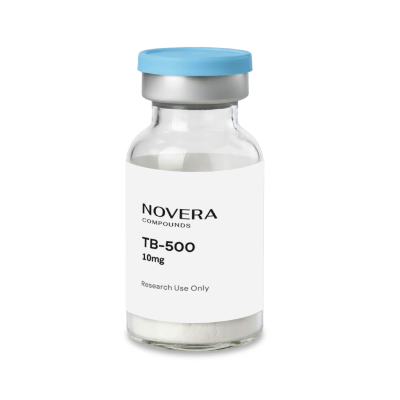
At PeptidePeak, you may find a wide selection of premium, science-grade peptides to support studies that may bring tissue biology, regenerative medicine, and cellular repair mechanisms to a new level. One of our most popular products is TB-500, which is a synthetic version of Thymosin Beta-4 – a naturally occurring peptide that is crucial for proper tissue repair, cell migration, and new blood vessel formation in the body.
All the explorations regarding TB-500 are indicated strictly for clinical research and educational purposes. As this peptide is intended solely for laboratory investigation and is not approved for human use, all the details below are meant to provide a clear context based on the current scientific literature. Consult a qualified professional after studying the material presented at PeptidePeak if any questions occur about the product.
Biochemical Characteristics of TB-500 (Thymosin Beta-4)
TB-500 is distinguished by a rather simple peptide structure, although its biological functions are quite complex. Below, we’ll outline the details of its molecular profile to improve understanding of this peptide.
“TB-500’s molecular architecture is deceptively elegant,” explains Dr. Robert Doyle, a biochemistry researcher at a leading research institute. “Its 43-amino-acid sequence contains a critical actin-binding domain that drives its remarkable cellular effects. This seemingly simple structure underlies an extraordinarily complex range of biological activities.”
Molecular Profile
TB-500, also known as Thymosin Beta-4, is naturally present in nearly all human and animal cells, with the highest concentrations in wound fluid, blood platelets, and other tissues that take part in the healing process. It consists of 43 amino acids. The synthetic version has been thoroughly studied due to its positive impact on the tissue regeneration process, wound healing, and cellular repair mechanisms. Here is a short overview of the product’s molecular profile: Amino acid length: 43; Chemical class: Synthetic peptide; Stability: The product is known for its stability, which only contributes to its healing properties and regenerative effect; Structure basis: The primary structure of the product consists of the N-terminal region of Tβ4 with a vital actin-binding domain in it, which is crucial for the peptide’s cellular effects due to actin’s importance for cell motility, morphology, and various signaling cascades.
TB-500 Molecular Characteristics
Characteristic
Details
Amino Acid Length
43 amino acids
Chemical Classification
Synthetic peptide (oligopeptide)
Natural Occurrence
Present in nearly all human and animal cells; highest in wound fluid and blood platelets
Key Structural Feature
N-terminal actin-binding domain
Primary Mechanism
G-actin sequestration and cytoskeletal regulation
Stability
High stability contributing to therapeutic potential
Research Status
Preclinical and limited clinical research; not approved for human therapeutic use
Synthesis and Manufacturing Process
According to studies, TB-500 is manufactured using Fmoc (9-fluorenylmethoxycarbonyl) solid-phase peptide synthesis. The protocol includes the following crucial steps: Resin loading: The first amino acid, which is serine in Tβ4, is combined with the solid support resin. The optimal loading density to reduce aggregation during the chain formation is 0.3-0.6 mmol/g; Iterative coupling cycles: HBTU/HOBt or HATU activation chemistry is used to combine each amino acid with 3-5 fold molar excess of protected amino acids; Fmoc deprotection: Fmoc protecting group is withdrawn between the coupling cycles by 20% piperidine in DMF; Complex sequence management: Specialists must pay special attention to the LKKTET region (residues 14-19) due to its aggregation tendencies, which is why pseudoproline dipeptides or microwave-assisted coupling are often required; N-terminal acetylation: Once the chain is fully formed, the peptide is acetylated with the help of acetic anhydride to succumb the biologically active N-acetylated form; Cleavage: TFA-based cocktail delivers the peptide from the resin and extracts side-chain protecting groups.
Mechanisms of Action in Research Models
The biological effects of TB-500 are mediated by a combination of interconnected processes. Actin regulation is a foundational mechanism that guides downstream cellular responses critical to tissue repair and regeneration in the body. This enables the following mechanisms of action:
Cytoskeletal Regulation and Actin Sequestration
The primary mechanism of Thymosin Beta-4 consists in its ability to bind to G-actin (globular actin), sequestering it and stopping polymerization into F-actin (filamentous actin). Such actin reserves make rapid cytoskeletal remodeling possible, which answers cellular signals and enables such processes: Cell migration for wound healing; Lamellipodia and filopodia formation; Stem cell mobilization and homing.
Angiogenic Signaling Pathways
TB-500 is able to upregulate vascular endothelial growth factor (VEGF) expression, as well as increase endothelial cell migration. This is crucial for new blood vessel creation, which is essential for tissue repair. That’s what the peptide promotes: Vasodilatation enhancement through endothelial nitric oxide synthase (eNOS) activation; Capillary density growth in ischemic tissues; Better extracellular matrix remodeling through matrix metalloproteinase (MMP) expression.
Anti-Inflammatory and Immunomodulatory Effects
According to recent studies, TB-500 treatments exhibit potent anti-inflammatory properties, primarily by modulating inflammatory cytokine expression. Such results are achieved through: A significant decrease in neutrophil infiltration at the injured areas; Reduced transcription of inflammatory genes that are related to NF-κB pathway inhibition; Improved macrophage polarization toward the anti-inflammatory phenotype.
Stem Cell Mobilization and Differentiation
This one is among the most therapeutic mechanisms of TB-500: it is able to mobilize endogenous stem cells and progenitor populations. The peptide pushes stem cells to leave their niches and migrate to the injured areas. It’s possible thanks to: Better regulation of SDF-1α/CXCR4 axis signaling; Enhanced cell-matrix interactions due to stronger expression of integrin receptors; Direct effects on mesenchymal stem cell (MSC) proliferation and differentiation.
Note: According to documented research, within 24-48 hours after TB-500 therapy, circulating endothelial progenitor cells (EPCs) increase by 180-230%. Furthermore, it is noteworthy that the cells are guided to sites of vascular injury or ischemia.
Cardioprotective Mechanisms
In cardiac tissue, TB-500 has demonstrated results that extend well beyond simple tissue repair. It preserves viable myocardium by enhancing cardiomyocyte survival, improving cardiac function after myocardial infarction, and promoting essential and highly valuable remodeling. Animal studies have shown a noticeable improvement in ejection fraction of 15-25% compared to exhibits post-myocardial infarction.
Dr. Amanda Foster, a cardiovascular researcher specializing in regenerative therapies, notes: “The cardioprotective data on TB-500 is particularly compelling. We’re seeing not just preservation of heart tissue, but active remodeling and functional improvement in preclinical models—outcomes that could have profound implications for heart attack recovery if validated in larger clinical trials.”
180-230% increase in circulating EPCs within 24-48 hours
Cardioprotection
Cardiomyocyte survival, tissue remodeling
15-25% improvement in ejection fraction post-MI (animal models)
Research Applications and Animal Studies
BT-500 use has been investigated across multiple fields, demonstrating promising results. The primary areas are musculoskeletal healing and regeneration, but there are other major considerations that should be mentioned, so let us take a closer look at the major areas where TB-500 has demonstrated excellent results in preclinical research.
Area #1. Wound Healing and Dermal Effect
Preclinical research indicates that TB-500 demonstrates efficacy in excisional and incisional wound healing, supporting its significant therapeutic potential. Some of the researchers suggest: Enhanced compromised wound healing. It means diabetic or aged animals whose wound-healing abilities are impaired. According to the research, TB-500 has the ability to partially and, in some cases, even completely restore healing abilities even in challenging models, which may potentially achieve beneficial results in chronic wounds, diabetic ulcers, and other complicated wound recovery; Sufficient scarring treatment. Histological analyses demonstrate improved collagen deposition and organization, indicating that scar tissue may develop superior mechanical properties. In some models, the peptide provided more normal tissue architecture by reducing scar formation, which is quite promising and has significant clinical interest; Healed tissue quality upgrade. Across rodent models of excisional and incisional wounds, TB-500 treatment has repeatedly been shown to speed wound closure, promote re-epithelialization, and improve the overall quality of the repaired tissue. It also reduces inflammation, enhancing wound repair and faster muscle recovery, which may potentially be a significant relief for individuals with chronic pain.
“What’s particularly exciting about TB-500 in wound healing research is its effectiveness in compromised models,” states Dr. Maria Gonzalez, a tissue biology specialist. “We’re seeing healing restoration even in diabetic and aged animal models where conventional therapies often fail. This suggests real therapeutic potential for difficult-to-treat chronic wounds.”
Area #2. Cardiovascular Applications
TB-500 research on the cardiovascular system is another promising area in preclinical studies. The peptide’s effect has been studied on myocardial infarction models, demonstrating impressive regenerative properties. Once administered, TB-500 demonstrated lower infarct intensity, better cardiac function, and enhanced survival in rodent and large-animal models. The studies also suggested that long-term use of the treatment reduces negative cardiac remodeling after myocardial infarction, which is critical for preventing heart failure progression. Researchers have also explored TB-500’s potential in other cardiovascular conditions, including peripheral vascular disease, where the pro-angiogenic peptide’s properties may promote collateral vessel formation and significantly enhance limb perfusion.
Area #3. Musculoskeletal and Connective Tissue Repair
TB-500 has been studied across multiple models of musculoskeletal injury and pathology, including muscle damage as well as tendon and ligament injuries such as tears. The results suggest that the peptide encourages satellite cell activation and migration, which reduces myofiber formation tendencies and improves the inflammatory response to make the environment more favorable for muscle repair. This can be observed in models with both acute injury and chronic muscle damage. Another potentially promising research area is joint health. Although studies in this field are limited, the potential warrants further investigation given TB-500’s effects on osteoarthritis models. The peptide might promote cartilage repair, decrease inflammatory joint destruction, and generally enhance joint function; however, further investigation is still required.
Area #4. Neurological Applications
TB-500 is drawing growing interest for potential use in neurological conditions, where the central nervous system has limited ability to regenerate and treatment options remain inadequate. Researchers have studied its effects in models of traumatic brain injury, stroke, spinal cord injury, and neurodegenerative diseases. In traumatic brain injury and stroke models, TB-500 has been linked to smaller lesion sizes, reduced neuronal cell death, and better functional recovery. These effects are thought to involve neuroprotection, dampening of inflammation, and increased angiogenesis to support tissue repair. Some studies also suggest it may encourage neurogenesis or enhance neural plasticity. In spinal cord injury models, TB-500-treated animals have shown improved motor outcomes, less secondary damage, and greater preservation of tissue. Benefits may be driven by increased axonal sprouting and favorable changes to the glial scar environment.
TB-500 Research Applications Overview
Research Area
Key Applications
Notable Findings
Clinical Potential
Wound Healing
Diabetic ulcers, chronic wounds, surgical wounds
Restored healing in compromised models, reduced scarring
Smaller lesions, reduced cell death, improved motor outcomes
Emerging – early preclinical stage
Clinical Evidence and Human Research
Although the synthetic version of thymosin beta-4 (TB-500) has not been extensively studied in human clinical trials, the naturally occurring peptide Tβ4 and its derivatives have been evaluated in certain clinical settings. The most notable research examined Tβ4 use in patients with acute myocardial infarction. Here are the key points.
Phase II Cardiac Clinical Trial
During the trial, researchers worked with people who had severe ST-elevation myocardial infarction (STEMI) following percutaneous coronary intervention. They were divided into two groups: one received scheduled intravenous Tβ4 infusions, and the second received a placebo. The primary research objectives were to evaluate safety, tolerability, and early signs of efficacy, which had previously been measured using cardiac MRI to assess left ventricular function and infarct size. The study’s results showed: High safety levels without any side effects caused by Tβ4; Positive tendency toward reduced infarct size at the point of 6 months; Better local wall motion in the peri-infarct zone; No crucial changes in major adverse cardiac events (MACE) at the point of 12 months. Although the results were promising, the lack of follow-up studies is evident. For a successful Phase III trial, the research must be larger, with more patients for a higher sample size.
Wound Healing Applications
Pilot studies assessed topical Tβ4 formulations for a range of wound-healing applications. One study enrolled 24 patients with chronic venous leg ulcers; participants applied a 0.03% Tβ4 gel twice daily over an 8-week period. The outcomes were as follows: 42% of complete healing with Tβ4-treated wounds compared to 15% in standard care; Wound area reduction in 58% vs. 28% in controls; Faster granulation tissue formation; No side effects or safety issues. Additional studies reported successful healing cases of diabetic foot ulcers, pressure ulcers, and surgical wound complications. However, controlled trials are required for further validation.
Dr. Steven Park, a wound care specialist involved in clinical peptide research, observes: “The pilot data on topical thymosin beta-4 for chronic wounds is encouraging. A 42% complete healing rate versus 15% with standard care is clinically meaningful, especially for patients who’ve failed conventional therapies. However, we need larger controlled trials to confirm these findings.”
Clinical Ophthalmology
RGN-259, a derivative of thymosin beta-4 (Tβ4), has been evaluated in clinical trials for neurotrophic keratopathy and dry eye disease. During the Phase II trial, topical RGN-259 demonstrated significant improvements in corneal healing in patients with acute dry eye disease. A Phase III trial in neurotrophic keratopathy achieved 26.3% healing in treated patients vs. 12.5% in controls (the study took roughly 8 weeks).
Human Clinical Research Summary
Application
Study Phase
Key Results
Status
Cardiac (STEMI)
Phase II
Reduced infarct size, improved wall motion, high safety profile
Awaiting Phase III trials
Chronic Venous Ulcers
Pilot Study (n=24)
42% complete healing vs. 15% standard care
Needs larger controlled trials
Neurotrophic Keratopathy
Phase III (RGN-259)
26.3% healing vs. 12.5% control
Most advanced clinical stage
Dry Eye Disease
Phase II (RGN-259)
Significant corneal healing improvements
Under evaluation
FAQ
Is TB-500 approved for clinical use for humans?
Human clinical evidence is still limited; regulatory approval for clinical use is not yet available. All current evidence comes from animal and laboratory research; however, TB-500 has demonstrated promising results and potential benefits in human clinical trials.
Is TB-500 different from other known healing peptides?
TB-500 is a unique product primarily due to its mechanism of action: it acts through actin sequestration, thereby promoting further cell migration. It has the ability to travel long distances through the tissue, which is not commonly observed in other peptides; it’s probably possible due to its low molecular weight and unique structure.
How exactly are Thymosin Beta-4 and TB-500 related?
TB-500 is a synthetic peptide created specifically to represent the active region of the naturally occurring protein, Thymosin Beta-4. Although they share similar properties, TB-500 contains the key amino acid sequence that enables the biological activity of the full protein and is therefore well-suited for research applications.
Is TB-500 an injectable peptide?
Generally, TB-500 comes in the lyophilized powder form that’s meant to be reconstituted. It can be used alone or combined with other peptides, such as BPC-157.
Can TB-500 be used as a dietary supplement or therapeutic drug?
No, you probably cannot buy TB-500, even if you are a licensed medical provider. Regulatory authorities generally classify it as a research chemical, so using it for humans is strictly prohibited. Studies suggest that it cannot be marketed legally as a drug for peptide therapy or a dietary supplement, and its sale must be strictly for laboratory research purposes.
How is TB-500 typically administered in research?
During the animal studies, TB-500 is typically administered via subcutaneous or intramuscular injections, depending on experimental goals.
What are the results of long-term TB-500 use?
Long-term effects of TB-500 usage are unknown, especially for humans, as the current lack of human research cannot guarantee 100% safety after administration. Purchasing TB-500 for human use entails significant risks due to the lack of regulatory oversight over its manufacturing.
5 Sources are used
Peptide Biologix. TB-500 (Thymosin Beta-4) - Research Monograph. https://peptidebiologix.com/tb-500
Peptpedia. TB-500 - Research Information | Peptpedia. https://peptpedia.org/peptide/tb-500
Emmie N M Ho та ін. Doping control analysis of TB-500. https://pubmed.ncbi.nlm.nih.gov/23084823/
BioTech Pharma Research Institute. TB-500 (Thymosin Beta-4 Fragment): A Comprehensive Literature Review. https://biotechpharma.org/tb-500-research
Vincent Williams. TB500 and Muscle Recovery: How It Works for Bodybuilders. https://thomsonscientific.com/supplements/tb500/

There are no reviews yet.