IMPORTANT: All the content presented on this website is for educational purposes only. Product descriptions, industry news, and blog posts are intended to inform and broaden your knowledge on the topic. Consult a specialist before making any decisions regarding peptide usage.
At PeptidePeak, our main goal is to equip researchers, clinicians, and lab professionals with high-purity, research-grade peptides for advanced laboratory studies. Our catalog features a broad selection of compounds used for research regarding aging biology, cellular signaling, and endocrine regulation.
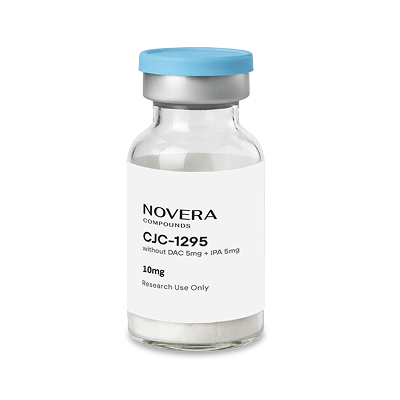
CJC-1295 is a growth hormone-releasing peptide that’s commonly used in biometrical research. CJC-1295, which is a synthetic peptide, works as an analogue of growth hormone-releasing hormone (GHRH). It’s widely known for its unique pharmacokinetic profile, which is primarily enabled by bioconjugation using drug affinity complex (DAC) technology.
Here, we’ll gather the most recent and important information regarding CJC-1295 injection, including study results on metabolic stability, molecular architecture, and clinical applications, as well as its potential in human studies. By the end, you’ll understand the specifics of CJC-1295 and why it, along with other peptides, raises such interest among researchers.
WORTH KNOWING:CJC-1295 and Ipamorelin are available for research purposes only and should be purchased from reputable sources. It requires a prescription from a licensed physician for safe acquisition. PeptidePeak is an example of a trustworthy supplier with top-notch peptides available for research.
Biochemical Characteristics of CJC-1295
CJC-1295 is a synthetic peptide analog of the GH-releasing hormone receptor protein created from 30 amino acids. In some sense, the compound is a tetrasubstituted derivative of the native GHRH(1-29) sequence, strategically engineered to enhance its pharmacokinetic properties and resistance to enzymatic degradation. Most of the data we have come from rodent models and large animal models, though clinical pharmacokinetic studies in humans are quite promising as well. Below, we examine its molecular profile and biological activity.
Molecular Profile
CJC-1295 contains a modified version of the first 29 amino acids in the chain of GHRH to improve its stability. A Drug Affinity Complex (DAC) in the composition allows it to bind to serum albumin to guarantee a longer half-life. This modification demands fewer injections while still maintaining satisfactory GH and IGF-1 levels. Thus, the peptide is available in two forms: a long-lasting GRF analog (with DAC) and a standard form (without DAC). Key molecular characteristics include:
Amino acid length: 29;
Chemical class: Synthetic peptide;
Mechanism category: GHRH analog for growth hormone stimulation;
Primary research targets: Growth hormone deficiency (GHD), muscle wasting and sarcopenia, endocrine system research.
Design rationale: Stimulates the pituitary gland to increase growth hormone release.
Comparative Pharmacokinetic Profile: CJC-1295 with DAC vs. without DAC
Parameter
CJC-1295 with DAC
CJC-1295 without DAC (Mod GRF 1-29)
Estimated half-life
5.8–8.1 days
~30 minutes
Albumin binding
Yes (covalent, via DAC)
No
GH elevation duration (single dose)
6+ days
1–3 hours
IGF-1 elevation duration (single dose)
9–11 days
Hours
Mean GH increase
2- to 10-fold above baseline
Transient pulse only
Mean IGF-1 increase
1.5- to 3-fold above baseline
Modest, short-lived
Dosing frequency
Weekly or biweekly
Multiple times daily
Once-daily administration of CJC-1295, a long-acting growth hormone-releasing hormone (GHRH) analog, normalizes growth in the GHRH knockout mouse. Yet, it does so much more behind the scenes. The injection has demonstrated beneficial effects on insulin-like growth factor, fat metabolism, recovery, and sleep. Even though biochemical characteristics of CJC-1295 describe it as a synthetic GHRH analog, it cannot be a replacement for the growth hormone itself; the solution’s primary task is to stimulate the pituitary gland harmoniously to make its natural pulses more frequent, thus increasing the natural level of GH in the organism.
Mechanisms of Action
Regarding the mechanism of action of CJC-1295, it activates the GHRH receptor, leading to increased intracellular cAMP levels and subsequent activation of protein kinases that promote growth hormone synthesis. It is a common practice to use it with another peptide, Ipamorelin, which activates the ghrelin receptor, mobilizes intracellular calcium, and activates protein kinase C, leading to immediate growth hormone secretion.
The duo enhances the beneficial effects of the injection: while CJC-1295 primarily increases the amplitude of growth hormone pulses, Ipamorelin modulates their frequency. Together, they act synergistically on the growth hormone axis. Ionescu and Frohman (2006) confirmed that CJC-1295 increases trough and mean GH secretion and IGF-1 production while preserving natural GH pulsatility — notably, basal GH levels rose 7.5-fold and overall mean GH levels increased by 46%.
This finding is particularly significant as it demonstrates that CJC-1295 augments GH output without disrupting the body’s normal pulsatile secretion pattern. Regarding Ipamorelin specifically, Raun et al. (1998) described ipamorelin as a pentapeptide displaying high GH releasing potency in vitro and in vivo, and — crucially — found it did not elevate ACTH or cortisol plasma levels even at doses more than 200-fold above the GH ED50, distinguishing it from other secretagogues such as GHRP-6 and GHRP-2.
Mechanistic Comparison: CJC-1295 vs. Ipamorelin
Feature
CJC-1295
Ipamorelin
Receptor target
GHRH receptor (GHRHR)
Ghrelin receptor (GHSR-1a)
Intracellular signaling
↑ cAMP → Protein Kinase A activation
↑ intracellular Ca²⁺ → Protein Kinase C activation
Primary GH effect
Increases amplitude of GH pulses
Modulates frequency of GH pulses
Effect on ACTH/cortisol
No significant elevation
No significant elevation (selective)
Half-life
5.8–8.1 days (with DAC)
~2 hours
Combined effect
Synergistic stimulation of the GH/IGF-1 axis
Some users may experience fatigue or lethargy as a side effect of CJC-1295 and Ipamorelin; headache and injection site reactions are possible as well, which is why it’s highly recommended to only use this injection under the observance of a qualified medical professional. Some researchers claim that chronic use of CJC-1295 may lead to increased insulin resistance or decreased insulin sensitivity.
Research Applications of CJC-1295 Injection for GH Secretion
CJC-1295 combined with Ipamorelin has been studied in multiple fields, far beyond the androgen receptor. Below, we’ll examine the research application of the two peptides in more detail.
Area #1: Growth Hormone Shortage Research
Unlike direct growth hormone injections used for GH synthesis, CJC-1295’s main advantage is its ability to stimulate endogenous pulsatile GH secretion, which mimics physiological conditions more closely. That characteristic is particularly beneficial for studies in research models that examine the significance of pulsatile vs. continuous GH exposure on gene expression patterns, metabolic outcomes, and downstream signaling. The research is mainly concentrated on comparative studies of GH replacement opportunities, GH receptor regulation and desensitization, as well as tissue-specific responses to GH responses of various natures. In a pair of randomized, placebo-controlled, double-blind trials in healthy subjects aged 21–61, Teichman et al. (2006) demonstrated that a single subcutaneous injection of CJC-1295 produced dose-dependent GH increases lasting 6 or more days, while IGF-1 remained elevated for 9–11 days. After repeated dosing, mean IGF-1 levels stayed above baseline for up to 28 days, and no serious adverse reactions were reported.
Key Clinical Findings from the Teichman et al. (2006) Study
Outcome Measure
Result
GH increase (single dose)
2- to 10-fold above baseline for ≥6 days
IGF-1 increase (single dose)
1.5- to 3-fold above baseline for 9–11 days
IGF-1 elevation after multiple doses
Above baseline for up to 28 days
Estimated CJC-1295 half-life
5.8–8.1 days
Best-tolerated dose range
30–60 µg/kg (subcutaneous)
Serious adverse reactions
None reported
Area #2: Aging Process and Related Conditions
The connection between GH/IGF-1 and the aging process is a hot topic for discussion among researchers. The studies mainly examine the changes the body undergoes with age, including sarcopenia (age-related muscle loss) and increased adiposity. Experimental models in animal studies demonstrated that CJC-1295 treatment can partially reverse age-related reduction in lean mass and bone density; however, further extensive investigation is required to apply these results to human studies. In a proteomic study by Sackmann-Sala et al., sera from 11 healthy young adult men were analyzed before and one week after CJC-1295 injection using two-dimensional gel electrophoresis.
The research identified significant changes in serum protein profiles – including decreases in an apolipoprotein A1 isoform and a transthyretin isoform, as well as increases in several protein spots – suggesting these may serve as novel biomarkers of GH and/or IGF-1 action.
Area #3: Tissue Repair Studies
Considering GH and IGF-1 naturally play a significant role in the tissue repair process, no wonder CJC-1295 has found its place in studies that investigate its beneficial effect on wound healing, bone fracture repair, and muscle injury recovery, as well as lean mass and subcutaneous fat mass. In animal studies, CJC-1295 shows promising results in stimulating collagen production, thereby accelerating wound closure and improving tissue remodelling.
In addition, CJC-1295-treated animals showed better callus formation and faster attainment of mechanical strength than controls. Even though its clinical application requires further investigation, these findings still demonstrate its great potential for recovery from orthopedic injuries.
Area #4: Body Composition Laboratory Research
GH and IGF-1 are known for their anabolic effects, leading to increased interest from researchers in studies that cover the fields of muscle hypertrophy, strength development, and athletic performance. During preclinical studies, animals treated with CJC-1295 that participated in resistance exercise training demonstrated apparent increase in lean body mass accretion, in addition to increased muscle fiber cross-sectional zone and contractile protein synthesis.
However, we must emphasize that CJC-1295 is prohibited in competitive athletics by the World Anti-Doping Agency (WADA) for performance-enhancing purposes. The research in this area is limited by controlled laboratory studies that examine the physiological mechanisms GH/IGF-1 have on muscle tissue, with no approval for non-therapeutic use. However, it demonstrates great potential in neuromolecular medicine.
Summary of CJC-1295 Research Areas and Evidence Status
Research Area
Primary Model
Key Outcome Observed
Evidence Stage
GH deficiency / replacement
Human (RCT)
Sustained GH and IGF-1 elevation; preserved pulsatility
Phase I/II human trials
Aging / sarcopenia
Animal models
Partial reversal of lean mass and bone density loss
Increased lean body mass, muscle fiber hypertrophy
Preclinical; WADA-prohibited in sport
Sleep architecture
Human / Animal
Potential enhancement of slow-wave sleep and GH release
Preliminary / observational
Area #5: Sleep Quality Studies
Previous studies suggested that CJC-1295 may potentially improve sleep architecture by perfecting slow-wave (deep) sleep phases during which natural growth hormone release peaks typically happen. In addition to subjective sleep quality measures, there’s also a potential recovery processes enhancement, which is associated with GH release during the deep sleep phase. These findings are quite significant for aging research, as well as for recovery optimization studies in rehabilitation and athletic fields.
FAQ
Is CJC-1295 approved for human clinical use?
No. CJC-1295 is not FDA-approved for human medical use. Its long-term effects on humans are not yet well studied; therefore, it’s impossible to guarantee a safe experience for patients. However, in some cases, this product is used under a therapist’s observation, and even though this method is not fully safe, it’s the only acceptable form of using CJC-1295 for humans.
Why is CJC-1295 popular in scientific research communities?
CJC-1295 is often sought for increases in lean muscle mass, fat loss, improved deep sleep, and anti-aging benefits. Its results are promising for athletes and individuals with growth hormone deficiency; therefore, researchers have invested substantial effort in human studies of CJC-1295 to develop the safest possible formulation, and the work still continues.
Can CJC-1259 be used as a dietary supplement for muscle growth?
No. CJC-1295 is not classified as a dietary supplement and is not approved for therapeutic use. Even though the data on aging research and metabolism studies are quite promising, its therapeutic usage is not supported by regulatory agencies and should be considered experimental.
Is CJC-1259 used as a growth hormone?
Not really. CJC-1259 is typically administered to signal the pituitary gland to produce more GH in steady pulses to increase growth hormone levels, but it doesn’t replace the GH itself. When combined with Ipamorelin (peptide also known as a selective growth hormone secretagogue), CJC-1259 delivers the best results: while Ipamorelin improves pulsatile secretion of GH, CJC-1259 provides a more prolonged stimulation, which closely mimics the body’s natural pattern of hormone release.
Is CJC-1295 the same as HGH?
No. HGH is a synthetic growth hormone that is delivered through an injection. CJC-1295 is a peptide that guarantees a continuous stimulation of the pituitary gland for a natural GH release in the body.
How much does CJC-1259 cost in research settings?
It’s impossible to provide an exact number, as the product’s cost varies with purity, supplier, and quantity. Research-grade CJC-1259 typically ranges from several hundred dollars, based on the quality standard and synthesis methods.
Do healthcare professionals need verification to obtain CJC-1259?
Yes, always. Under current peptide regulations, licensed professionals and research institutions must provide valid credentials or institutional documentation to purchase CJC-1295 for research purposes.
What are the storage instructions for CJC-1259?
Lyophilized (powder) vials with CJC-1295 must be stored in a freezer at -20 °C or below for long-term storage; it may also be kept in the refrigerator (2-8 °C) for several months. Once reconstituted with bacteriostatic water, the peptide should be refrigerated (2-8 °C) and used within a few weeks.
What is the difference between CJC-1295 with DAC and without DAC?
CJC-1295 with DAC contains a Drug Affinity Complex that enables it to bind albumin, thereby extending its half-life to 6-8 days. The variation without DAC (Mod GRF 1-29) has a half-life of around 30 minutes, thus a more frequent administration is required. Another difference is that the DAC version provides a stable GH increase, while the non-DAC option creates more acute GH pulses.
5 Sources are used
BioTech Pharma. CJC-1295: A Comprehensive Literature Review of GHRH Analog Mechanisms and Clinical Applications. https://biotechpharma.org/cjc-1295-research
Peptpedia. CJC-1295 - Research Information. https://peptpedia.org/peptide/cjc-1295
Peptide Biologix. CJC-1295: Comprehensive Research Monograph. https://peptidebiologix.com/cjc-1295
Maria Alba, Danilo Fintini, Alessia Sagazio, Betty Lawrence, Jean-Paul Castaigne, Lawrence A. Frohman, Roberto Salvatori. Once-daily administration of CJC-1295, a long-acting growth hormone-releasing hormone (GHRH) analog, normalizes growth in the GHRH knockout mouse. https://pubmed.ncbi.nlm.nih.gov/16822960/
Andy Silva. CJC-1295 Explained: How It Works, Benefits, Side Effects, and Safety. https://yuniquemedical.com/cjc-1295-growth-hormone/


There are no reviews yet.